

Xiaomi Opens a 38B World Model Built to Generate Robot Data
Xiaomi opened a 38-billion-parameter robot world model this week and uses it to generate training data, not to control robots directly. Robbyant and Alibaba each released several robot models at once.
A world model as a data engine
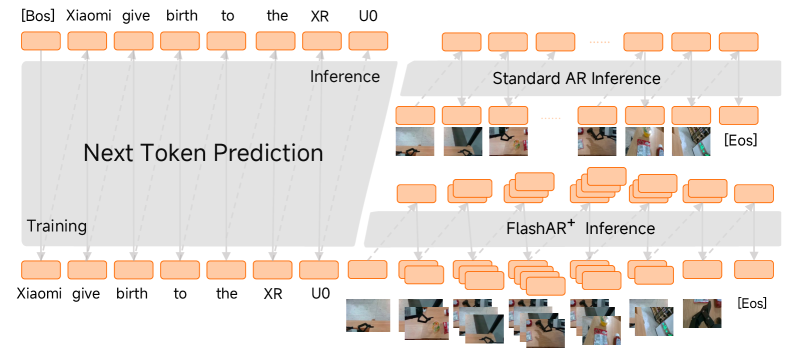
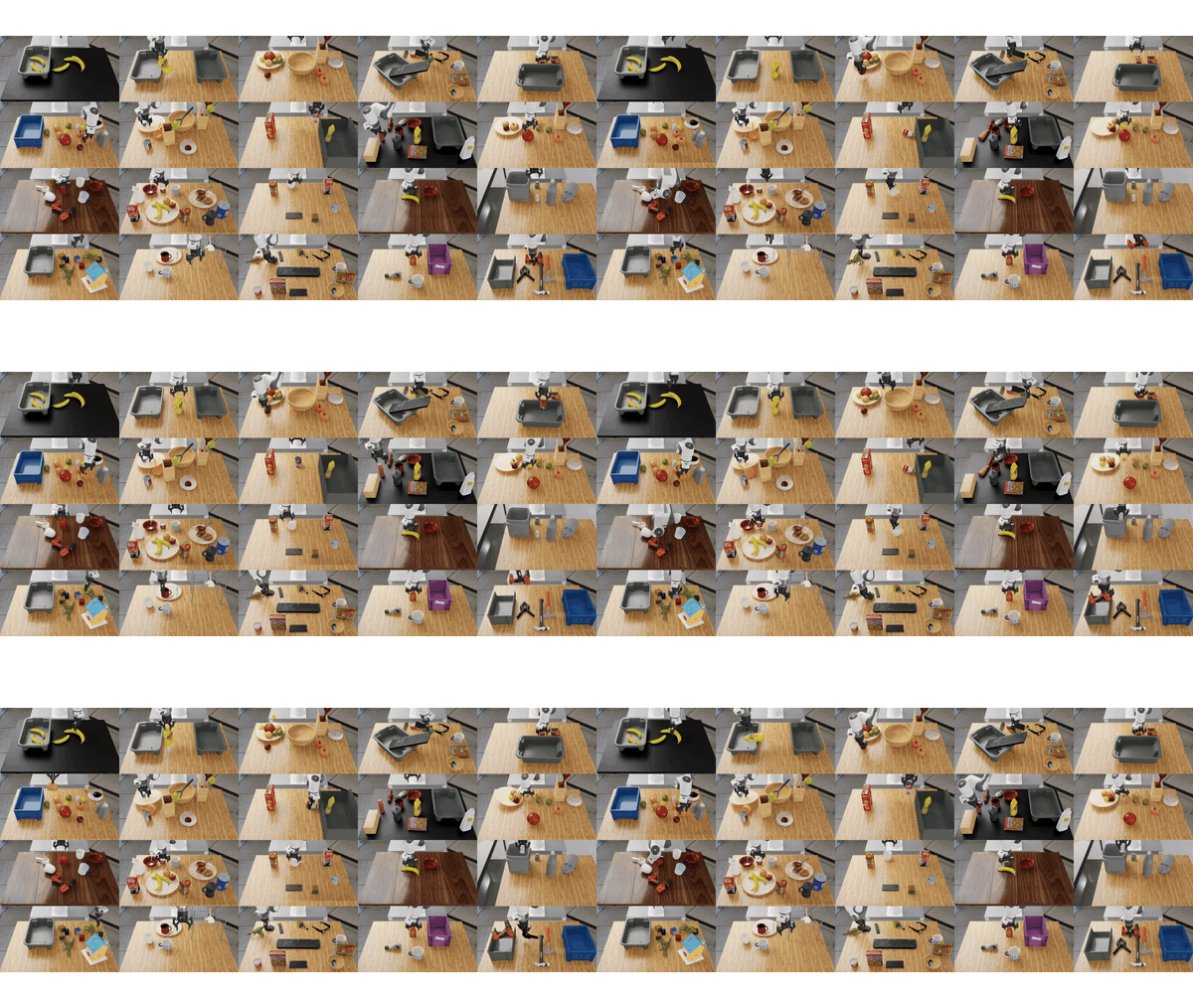
Xiaomi-Robotics-U0 is a single 38B model that generates robot scenes and video, built the same way as an image or video generator. Instead of using it to control a robot, the authors use it to generate training data, and report that this raised π0.5’s success on unfamiliar real-world manipulation from 36.9% to 63.2%. They also report topping a “World Arena” leaderboard for embodied video, and that human raters preferred its generated scenes over GPT-Image-2.0’s. Those numbers are Xiaomi’s own, measured on its own evaluations, but the weights and code are open, so you can run U0 as a data generator for your own policy and check whether the gain holds outside their setup.
Research
NVIDIA open-sources a benchmark that grades robot policies beyond pass-or-fail
RoboLab is an Isaac Lab benchmark that goes beyond pass-or-fail. It scores how completely and smoothly a manipulation policy completes a task, how well it holds up when the instructions, the scene, or the task length change, and exactly where it fails. It ships with RoboLab-120, a set of 120 human-curated tabletop pick-and-place tasks grouped by the skill each one tests, and the code is on GitHub. So it shows what to fix, not just which policy ranks higher.
Robbyant opens the rest of its LingBot stack
A week after open-sourcing LingBot-VLA 2.0, Robbyant released two more models, both trained on robot data from the start rather than repurposed from a model built to generate ordinary video. LingBot-Video is a Mixture-of-Experts video model trained on robot footage and rewarded for producing physically realistic clips. LingBot-World 2.0 is an interactive world model you can keep steering without it drifting over time; a distilled version runs 720p at 60fps, and it comes as a 14B model plus a 1.3B version that runs on a single GPU. With last week’s VLA, that is a full open set of models from one lab.
Alibaba AMAP ships an ABot model family the same week
AMAP released four models at once. ABot-C0 is a general quadruped controller trained on 16,074 motion clips, and its tracking performance continues to improve predictably as the training data grows. ABot-N1 is a navigation model that steers toward a target pixel in the camera image, an approach that works across different navigation tasks, and reports a 35-point jump in reaching named destinations. ABot-3DWorld 0 turns text, an image, or a video into a 3D scene you can move through, tied to real places on a map. ABot-AgentOS is a software layer that plans tasks and remembers across them, and it comes with a new benchmark, EmbodiedWorldBench. All of the numbers are self-reported.
EgoWAM asks what a world model should actually predict
EgoWAM, from Danfei Xu’s group at Georgia Tech, tests what a robot should learn to predict from everyday first-person human video. Keeping everything else the same, it compares three prediction targets: raw pixels, DINO features, or 3D motion flow. Pixels transfer poorly, DINO features improve performance on unfamiliar objects and scenes by up to 4x, and 3D flow improves performance on familiar tasks by 20 to 30%. Most world-model papers just assume a prediction target; this one measures which works. The same week, a separate paper laid out a research roadmap for world action models, the category to which EgoWAM belongs.
Your coding agent as a robot controller
VIA, from Dorsa Sadigh’s group at Stanford, recasts robot control as a software task: an off-the-shelf frontier agent such as Claude Code or Codex drives a manipulator through a browser-based 3D interface using screenshots and typed commands, with no robot-specific training and nothing beyond what is on screen, no exact positions of the robot or objects handed to it. On the tasks reported, the strongest agent hits 96.7% across three LIBERO-Goal tasks and 100% on a long-horizon assembly task, zero-shot. The provocation is that a capable computer-use agent can already handle some manipulation with no trained policy at all.
DexVerse benchmarks dexterity across arms and hands
DexVerse (UNC, HKU, Berkeley) is a simulated test suite for measuring dexterous manipulation, the fine-hand skills like grasping, using tools, and two-handed tasks. Its 100 tasks run across three robot arms and six robot hands, so the same task can be tried on different hardware, and it ships 3,180 demonstrations plus a VR tool for recording more. When the authors ran leading policies (Diffusion Policy, DP3, OpenVLA, π0.5) through it, success fell sharply on any task or robot body the policy had not been trained on.
A fleet-scale sidewalk-navigation dataset, crowd-sourced across 29 countries
FrodoBots-Mini-4K is 14,141 teleoperated sidewalk-rover rides, roughly 3,965 hours of front-camera video from 453 robots operated by people in 29 countries. Each ride carries synchronized GPS, IMU, bidirectional audio, and velocity control labels, and the set is released under CC BY-SA 4.0. It is the largest entry yet in the FrodoBots line, though the data is sidewalk navigation, not manipulation. The dataset viewer is currently broken, but the files download through the standard Hub client.
UniVR learns reasoning and physical dynamics from video alone
UniVR, from ByteDance, learns reasoning, physical dynamics, and planning from video alone, with no paired text. It trains with a reinforcement-learning objective that rewards logically and physically consistent predictions, and ships an open benchmark, VR-X, drawn from 16 sources covering long-horizon manipulation, spatial puzzles, and physical reasoning, along with code and models. It reports up to a 25% gain.
Quick hits
EmbodiedGen V2: Horizon Robotics’ open 3D world engine turns assets into simulated environments you can train robots in; the authors report that training with RL in these generated worlds raised real-robot success from 21.7% to 75.0%, with code released.
Hy-Embodied-VLM-1.0: Tencent’s open Mixture-of-Experts embodied VLM uses only 3B active parameters but reports leading results on 19 of 38 embodied benchmarks, close to a previous model that used 32B.
Mixture of Frames Policy: Shuran Song and Jeannette Bohg’s group at Stanford denoises a diffusion policy across several coordinate frames at once for bimanual mobile manipulation, reporting gains over picking the single best frame.
B-spline Policy: represents actions as continuous B-spline curves rather than discrete-time chunks, giving smooth trajectories that can be replayed faster while holding success rate (authors include Yuke Zhu and Yilun Du).
Regrind: learns contact-rich dexterous skills such as using scissors or a screwdriver from a single human demonstration via retargeting plus residual RL, transferring zero-shot to hardware, with code released.
DenseReward: synthesizes realistic failure trajectories in simulation to learn dense frame-level rewards, and releases the dataset, the reward models, and an evaluation suite.
ThorArena: a benchmark for force-aware humanoid interaction built from real human demonstrations with synchronized whole-body motion and both-hand contact forces, finding that leading whole-body controllers fall short of human reliability under contact.
Industry
Russ Tedrake’s Walden Robotics comes out of stealth
Walden Robotics launched at a $1.1B valuation on a $300M Series A led by Toyota entities, with NVIDIA, Boeing, and Samsung participating; it was founded by Russ Tedrake of MIT and formerly TRI. The approach builds on the large-behavior-model, diffusion-policy, UMI, and Drake lineage Tedrake is known for, and the company says it has been running in a Toyota plant since February.
General Intuition bets on gameplay video as pre-training
General Intuition trained a foundation model on millions of hours of gameplay video paired with controller inputs, then fine-tuned it to drive a quadruped with about eight minutes of real robot data, and raised $320M at a $2.3B valuation. There is no paper or released model, so the eight-minute claim can’t be independently checked.
Worth Watching
RSS 2026 ran in Sydney this week (July 13-17); award and paper pages were still catching up at press time, and the Data-Centric Robotics workshop is worth a look once materials post.
Xiaomi-U0, the LingBot family, and the ABot family all landed with open weights and vendor-reported numbers. The interesting follow-up is community fine-tunes and third-party benchmark runs that test those numbers on independent setups.
Two labs opened whole model families this week (Robbyant and Alibaba’s AMAP). Worth watching whether that recurs or was a one-week coincidence.